AI Customer Service Limitations in 2026 and How to Plan Around Them

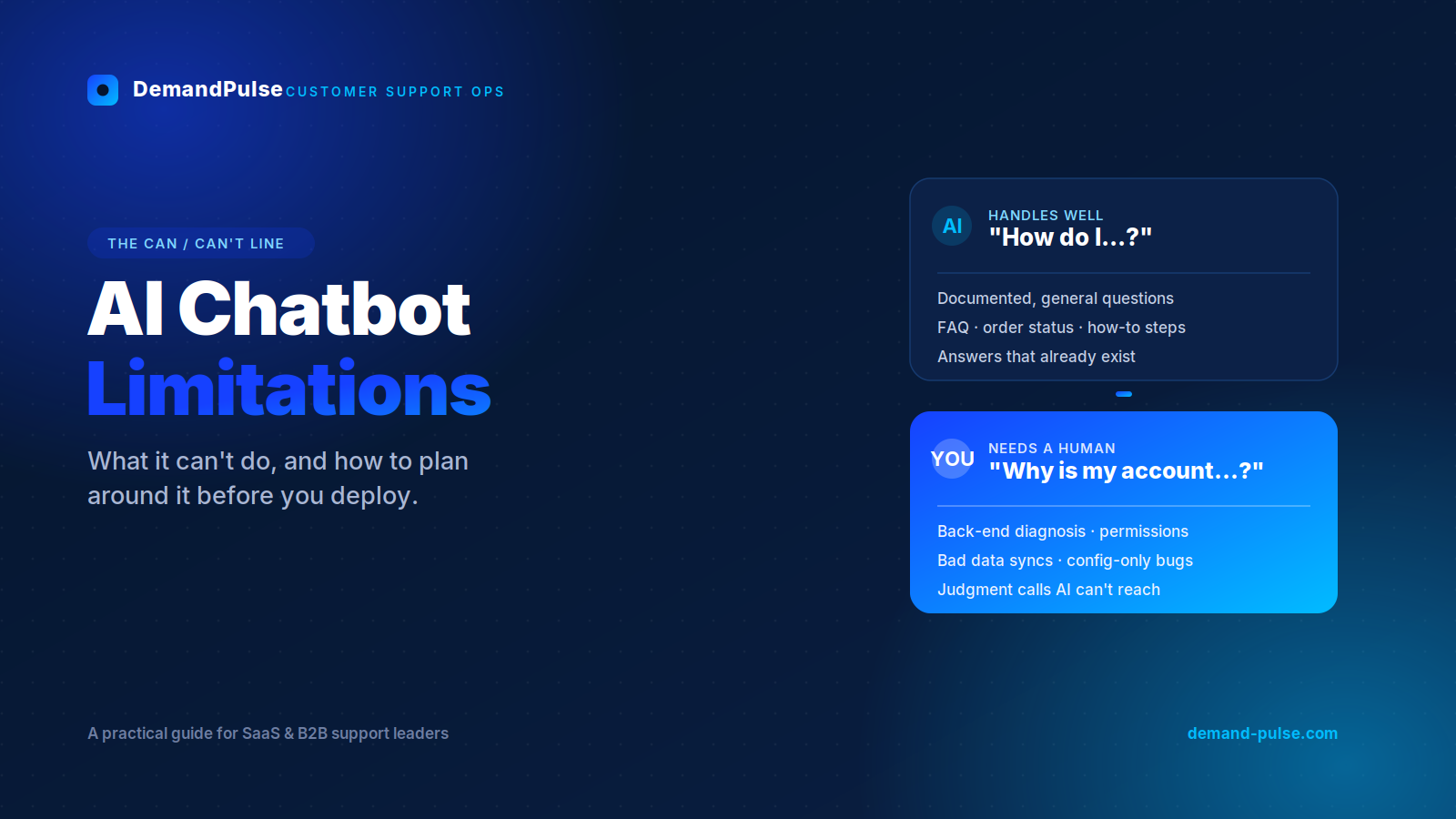
About 88% of contact centers across the globe use AI, yet only roughly 14% of self-service interactions truly resolve without a human.
AI has quietly become the best junior support rep most teams have ever hired. It answers "how do I" questions instantly, around the clock, for a fraction of the cost. Then a customer asks, "why is my account doing this," and the same AI stalls.
AI's real strength is keeping up. More than 20 chats can land at the same time and every one gets an immediate first answer, and plenty of new users treat the bot as a quick way to learn the product. But the account-specific tickets still call for a human, and customer sentiment backs that up.
Did you know that about 79% of people prefer a human, and longtime clients often ask for an agent before they even type.
Customer service driven by AI promises convenience. However, for most people, it only delivers friction.
This matters. Frustration is a sign that your customer is about to leave. When AI-focused frustration becomes widespread, it is more than just a technical problem. It is a trust problem. And in 2026, the deciding factor behind customer loyalty and retention is trust.
This does not make AI overhyped. It simply has edges, things it handles beautifully and things that are still out of reach. The teams that trace those edges before going live end up with a quicker, leaner queue and customers who actually like the experience. The ones that do not trace these are left with annoyed customers. This is because AI gives incorrect and irrelevant answers confidently, and agents are left to clean up the mess.
The Clean Line Behind Every AI Chatbot Limitation
AI is great when the answer already exists somewhere in your docs. It hits a wall the moment a question depends on what is happening inside a single customer's account. Nearly every AI chatbot limitation grows from that gap.
Ask a how-to question and the bot answers almost instantly. The trouble starts when the result is wrong, maybe a setting is off or a record failed to sync. Now the AI is stuck, because it cannot see into the backend to work out why one account behaves differently than the others.
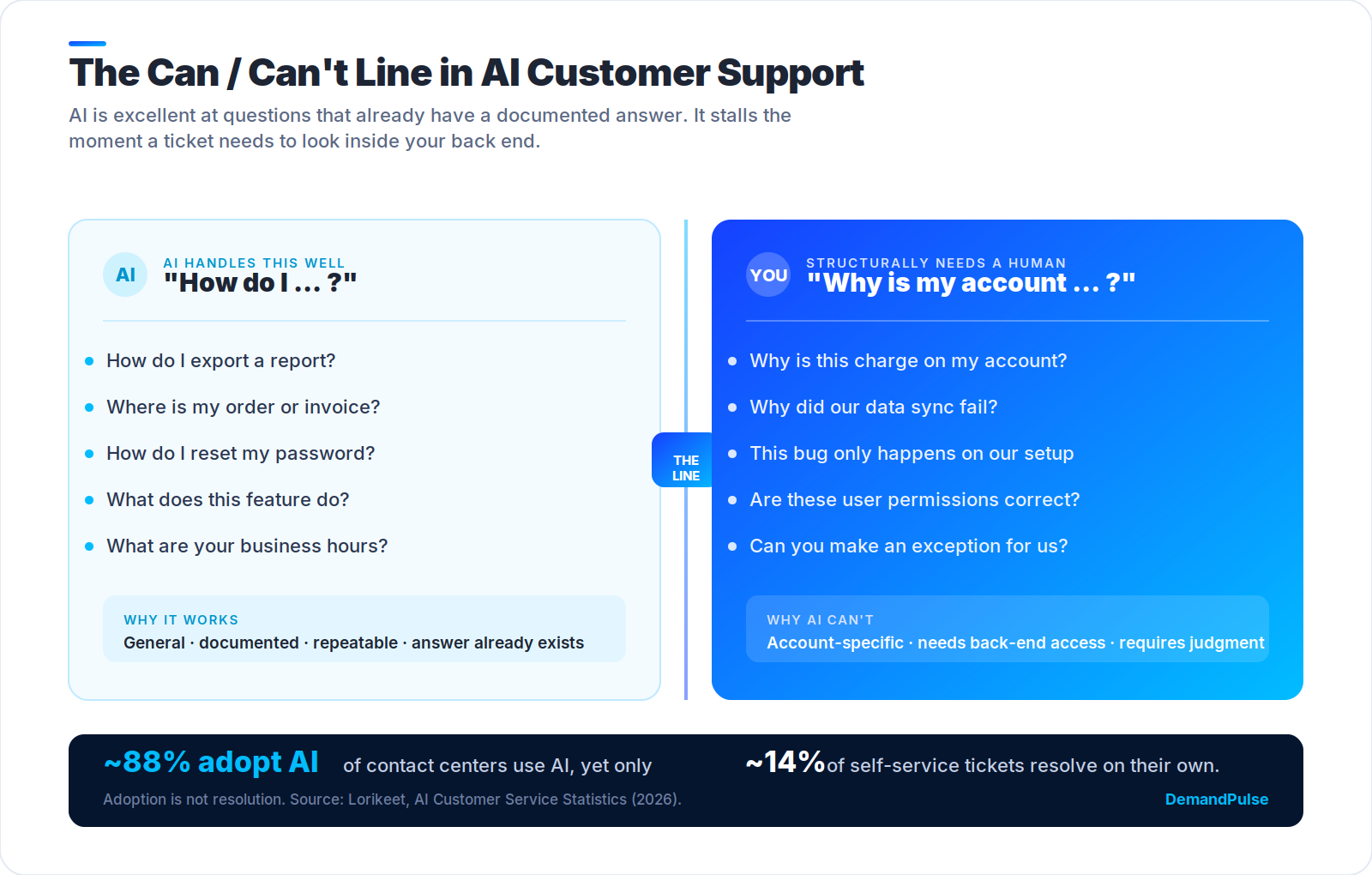
Adoption can look like success while masking the gap. About 88% of contact centers use AI, yet only roughly 14% of self-service interactions truly resolve without a human. Ours closed plenty of chats, but many auto-closed on silence. Handling and resolving are not the same thing.
Why AI in Customer Support Stumbles on Account-Specific Questions
AI tends to stall the moment a ticket gets personal to one account, since the answer depends on live, private data only that customer has. Agentic tools help with the predictable stuff, the documented actions you have wired in, like issuing a refund or running a known reset. Diagnosing a failure no one has seen before, and taking responsibility for the fix, is another matter.
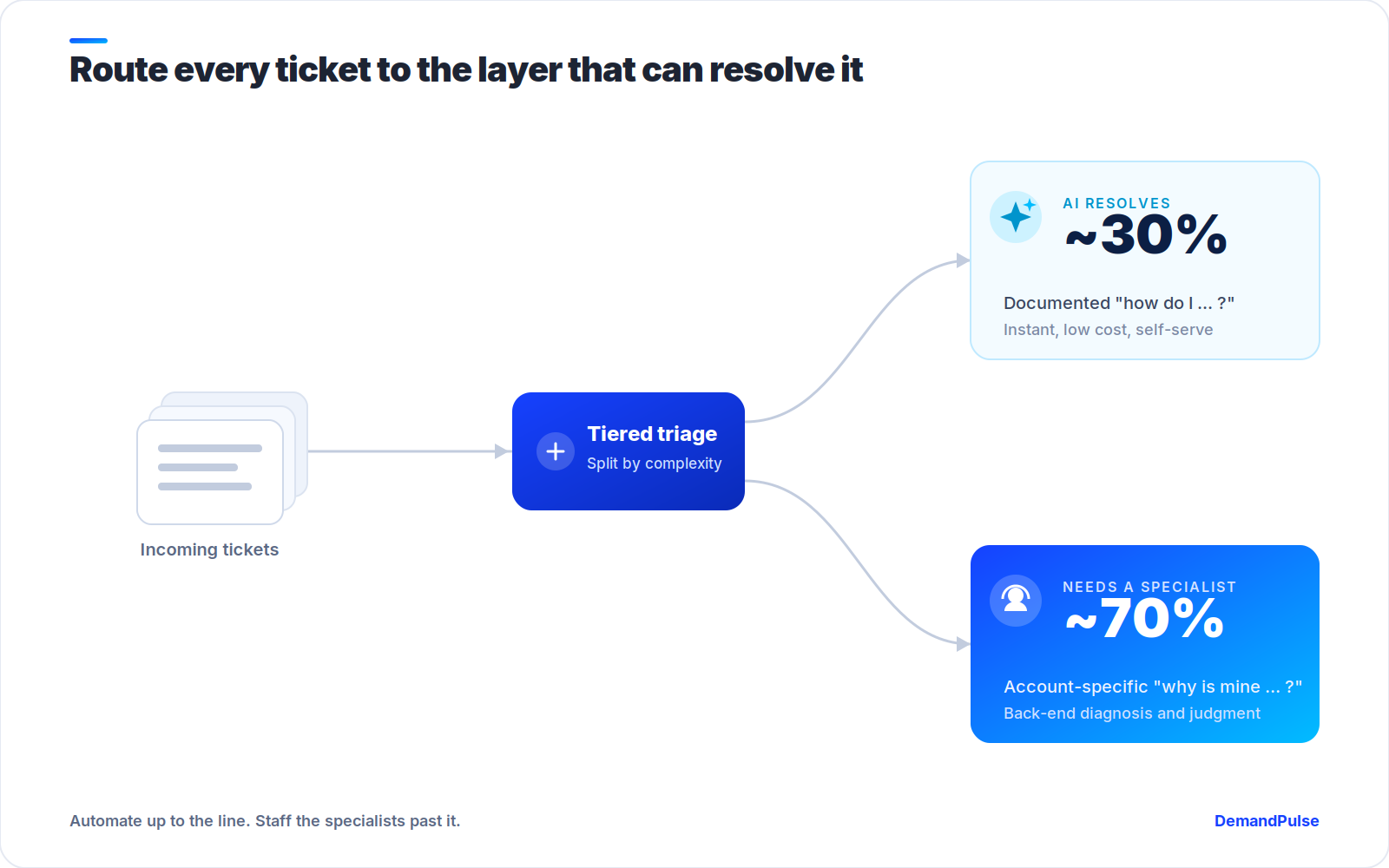
"At least 60 to 70 percent of our queries need us to look inside the client's account from the back end. The AI cannot do that. It gives the basic steps, then says, let me connect you to a human."
- Shahzad, Customer Support Team Lead
This is not a gap the next model release closes. According to a report by Gartner, more than 40% of agentic AI projects will be canceled by the end of 2027, citing cost, unclear value, and weak risk controls.
The AI Chatbot Limitations Every Support Leader Should Map
Name the limits before you deploy. These cover most failures.
No live account state, no diagnostics, no tracing a failed integration. "Check my account and tell me why" is out of reach.
With no documented answer it has nothing to retrieve. We watched ours follow an outdated article and confidently answer the wrong question.
Exceptions, goodwill credits, compliance-sensitive decisions, and churn-risk conversations need an accountable human who can read tone and rebuild trust.
Account data, PII, and client matters raise real security and confidentiality questions. In regulated verticals, "the bot answered it" is not a defense.
Stale content yields stale answers, a misspelled question can stump a basic bot, and migrating platforms can reset it entirely.
How to Plan Around AI Chatbot Limitations Before You Deploy
Getting started with AI in support is less about the bot and more about deciding, up front, what you will never hand it.
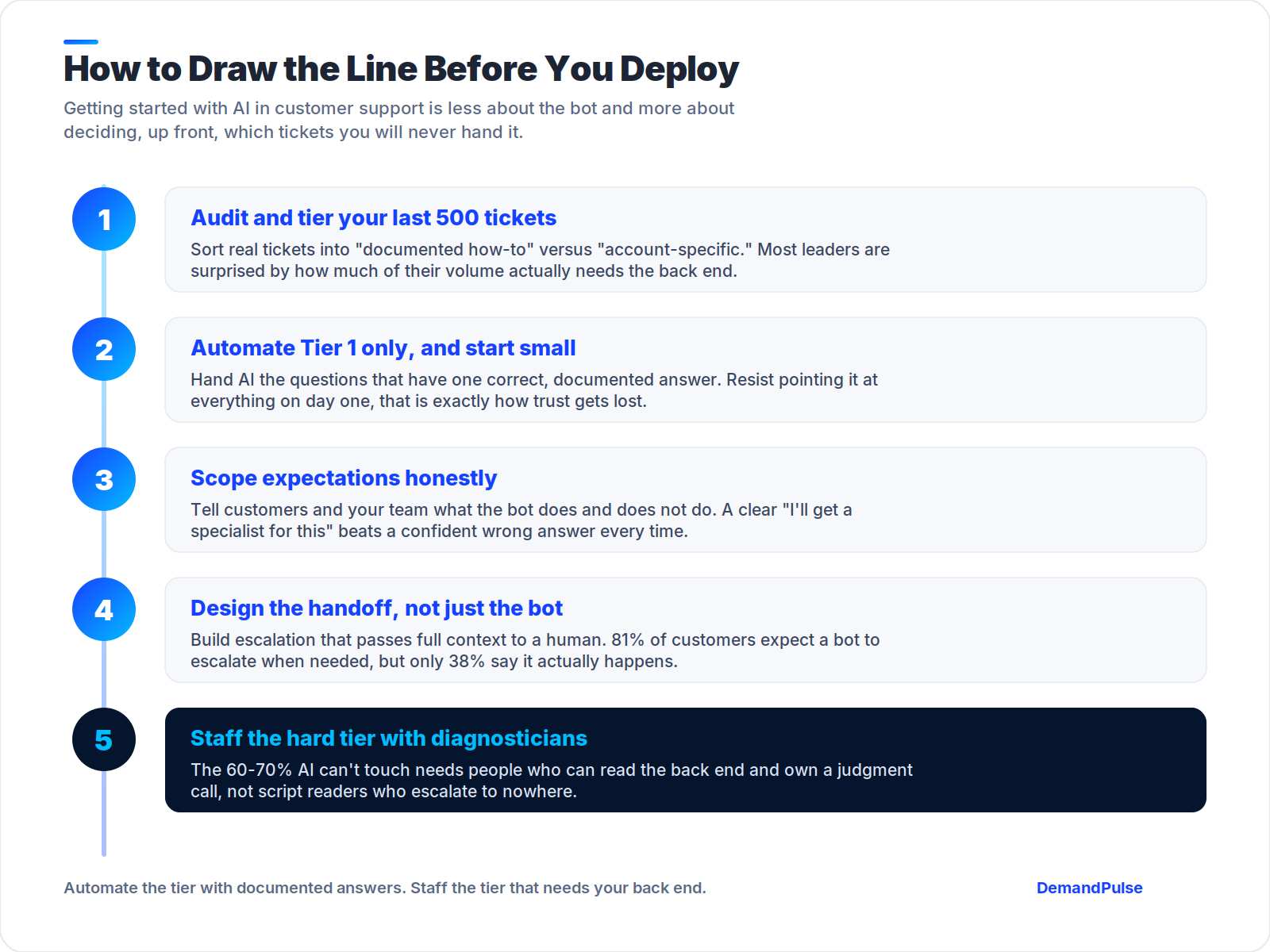
Tier your last few hundred tickets into "documented how-to" versus "account-specific," then point AI only at the first tier. Three habits helped: log every wrong answer and fix the source article, since that updates the bot; have the bot collect details before it escalates; and never loop a customer who has asked for a person.
That handoff is where most teams fail. 81% of consumers expect a bot to escalate when needed, but only 38% say it happens reliably. And watch a trap: time to a human can rise when customers loop with the bot first, so measure first response to a human, not the bot.
"No matter how much you develop the AI, clients still want the human touch. They want to tell us the problem and have us fix it, not follow steps a bot gave them."
- Shahzad, Customer Support Team Lead
How to Tell If Your AI Customer Support Is Actually Working
Most dashboards flatter you. Deflection rate looks great even when customers left frustrated, and an auto-close on silence counts as a "win" when the customer just walked away. Track what separates deflecting from resolving:
Confirmed by the customer, not auto closed on silence.
How often AI hands off, and how cleanly.
AI versus human, watched separately.
Not per deflected ticket.
"Resolved" tickets that come back are failures in disguise.
If true resolution sits far below deflection, the AI is hiding tickets, not handling them.
What AI Handles vs. What Needs a Human
AI's superpower is volume and speed: twenty chats at once get an instant first answer, and new users treat it as a self-serve tutor. The account-specific work still needs a human, and sentiment agrees: about 79% of people prefer a human, and longtime clients often ask for an agent before they even type.
Should You Automate, Hire In-House, or Outsource?
Automate the documented tier with AI, where it is cheap and fast. For the account-specific tier you have three options: in-house gives control but is slow and costly to scale; a BPO gives throughput but staffs script-readers; and a specialist partner gives trained agents who diagnose back-end issues and ramp in weeks, not quarters.
How you choose comes down to your ticket mix and how fast it changes. If most of your volume is documented and stable, automation plus a lean in-house team is usually enough. If the account-specific tier is large, spiky, or full of regulated and high-stakes cases, you need diagnosticians faster than you can realistically hire and train them. Stage matters too: earlier teams rarely have the documentation maturity or the recruiting bandwidth to staff a deep bench in-house, which is exactly where a specialist partner earns its place.
In practice, the strongest setups are hybrids, not either-or. Automate the documented tier, keep a small in-house core that owns product depth and the hardest escalations, and lean on a specialist partner to scale the account-specific work without a long hiring cycle. Whichever route you pick for that tier, judge it on the same things: how fast agents ramp, whether they diagnose root causes instead of reading scripts, and whether they operate under your SLAs, QA rubric, and security requirements. Those, not raw headcount, decide whether customers feel a difference.
How DemandPulse Helps You Grow Support and Customer Success With AI
DemandPulse builds and runs customer support operations for SaaS and LegalTech companies, and we run AI support hands-on. From Tier 1 AI deflection to Tier 3 specialists, we work as an extension of your team, not a BPO: we design your triage and knowledge base, deflect the documented tier with AI, and staff specialists who diagnose back-end issues, not read scripts.
Not sure where AI ends and humans begin in your queue?
Send us your ticket mix and we'll sketch your can/can't split, no commitment. Start with a free support audit.
Subscribe for Insights That Drive Growth
Practical tips to help you grow your business and build a great team, sent to your inbox.