The Inflection Point: When to Hire Your First Dedicated Customer Support Specialist

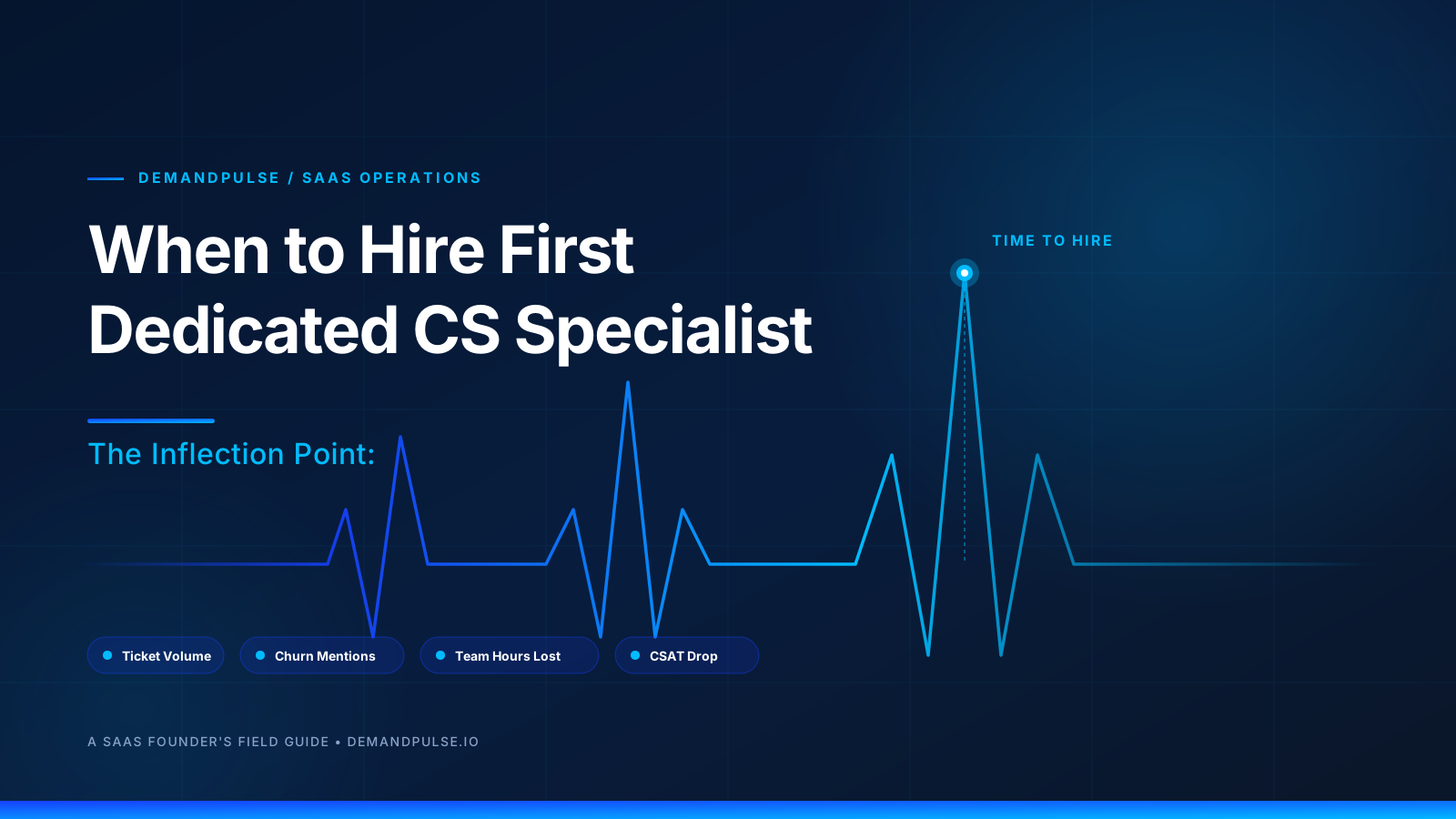
Every SaaS founder remembers the first time a customer message goes unanswered for a full day. Maybe two. It's the quiet moment when the scrappy, founder-led support model that felt charming at 20 customers starts eroding your product velocity, your team's focus, and your retention curve.
For most customer support SaaS operations, the real question isn't whether to hire customer support specialists - it's when.
"Wait too long and churn teaches you the answer. Hire too early and you've added payroll without proportional ROI."
The good news: the inflection point isn't invisible. It announces itself through four distinct, measurable signals.
The problem isn't a lack of awareness - it's that most founders try to make this call by gut feel, and gut feel fails here. Support pain is distributed across the team, which hides the true cost. Churn signals tied to support experiences lag by weeks, sometimes a full quarter.
And the muscle memory from earlier stages - we'll absorb it, we always have - stops working somewhere between your 50th and 200th paying customer. By the time the pain is obvious enough to act on instinct, you've usually been behind for months.
What makes this harder in customer support SaaS specifically is that the product and the support experience are inseparable in a user's mind. A confusing onboarding step, an unanswered integration question, a slow reply to a billing issue - all three read to the customer as the product doesn't work.
That's why the decision to hire your first client support specialist isn't really a staffing call. It's a product call dressed up as a hiring question, and treating it like a simple headcount decision is exactly how founders end up acting two quarters too late.
Why Timing Your First Customer Support Specialist Hire Matters
Support isn't a cost center - it's a retention engine. According to Zendesk's CX Trends report, 73% of consumers will switch to a competitor after multiple bad experiences.
Flip that around: HubSpot's State of Service data shows 93% of customers are likely to make repeat purchases with companies that offer excellent customer service.
And Salesforce research found that 88% of customers say the experience a company provides matters as much as its products.
The gap between knowing support matters and staffing it properly is where most early-stage SaaS companies leak revenue silently. Hiring customer support specialists at the right moment converts reactive firefighting into proactive retention - and protects the growth curve you're working so hard to bend upward.
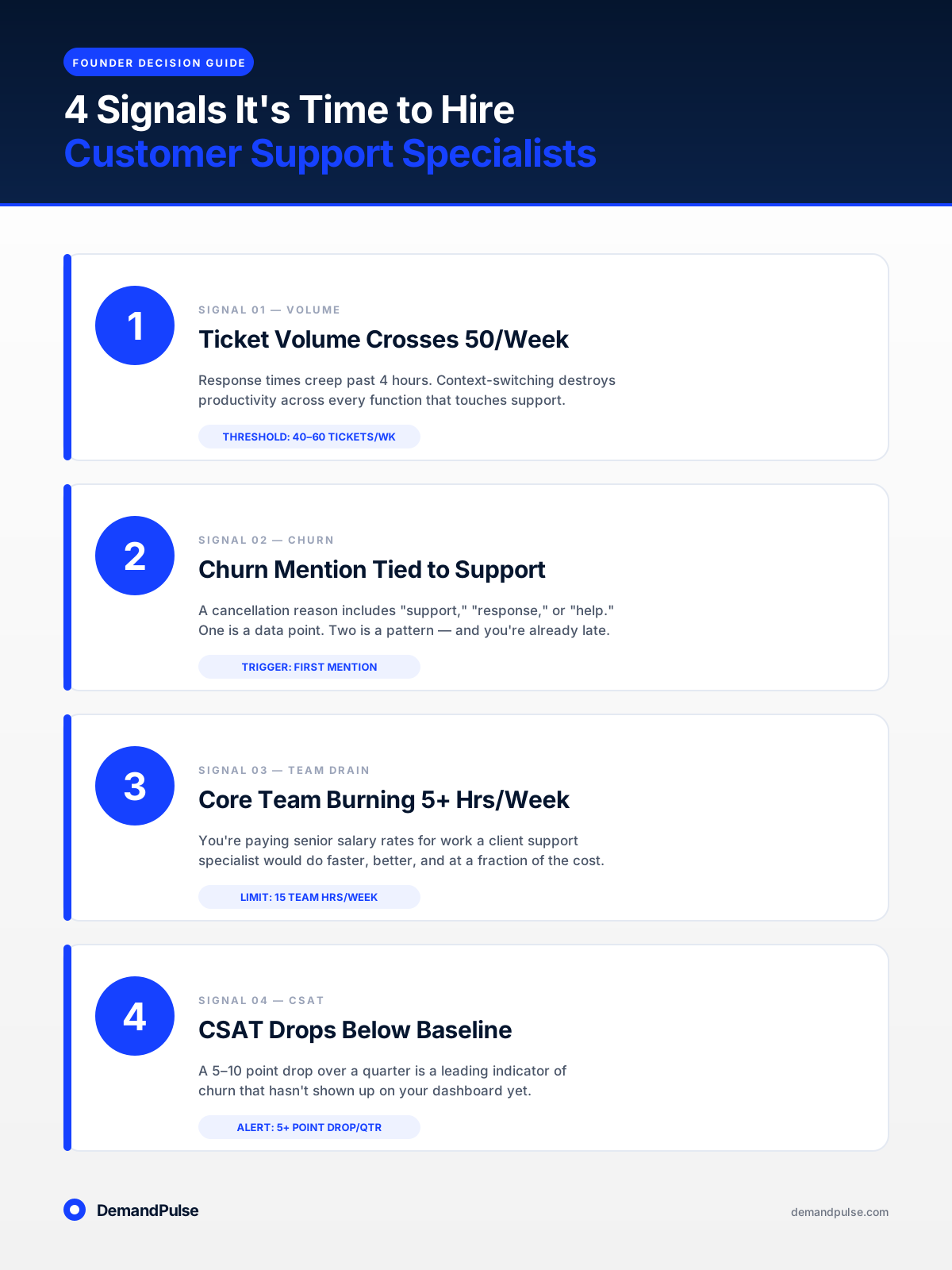
The 4 Signals It's Time to Hire Customer Support Specialists
Ticket Volume Has Crossed the Threshold
For most SaaS teams, the first trigger is pure math. When weekly inbound volume consistently crosses 40-50 tickets per week, a founder or rotating teammate can no longer respond within SLA without context-switching costs destroying their primary output.
What This Looks Like in Practice: A Series A analytics platform with 180 paying accounts watches weekly tickets climb from 15 to 55 over a single quarter. First response time slips from 2 hours to 11. Customer satisfaction hasn't tanked yet - but it will.
Benchmark: 40+ tickets per week with response times creeping past 4 hours.
You've Heard the First Churn Mention Tied to Support
This signal is the most dangerous because it shows up exactly once before it compounds. The first time a churn survey, a sales call recording, or an offboarding email mentions "slow responses," "unanswered questions," or "we couldn't get help" - that's not an anomaly. That's an early warning system.
What This Looks Like: A fintech SaaS loses a $24K ARR account. The exit note reads: "We liked the product, but we never felt supported." By the time leadership sees it, two more accounts are likely already quietly evaluating alternatives.
Rule of Thumb: 1 churn mention tied to support = investigate. 2 = hire.
Core Team Members Are Burning Hours on User Issues
Founder-led and engineer-led support works until it doesn't. The cost isn't the hours logged in Intercom or Zendesk - it's the product roadmap slippage, the delayed sales follow-ups, and the context-switching penalty on engineering sprints.
The Benchmark: When your CEO, CTO, or AEs are collectively spending more than 15 hours per week on reactive support, the ROI math has officially flipped. A dedicated customer support specialist costs a fraction of what you're losing in executive focus.
Quick Test: Ask your leadership team to log time spent on tickets for one week. If the combined total exceeds 15 hours, you're past the inflection point.
CSAT Has Dropped Below Baseline
If you're measuring CSAT (and every serious customer support SaaS operation should be), the fourth signal is the cleanest. A sustained dip of 5+ points below your trailing 90-day average - or any month under 85% - means your current model is failing your customers.
What This Looks Like: A DevTools startup with a steady 91% CSAT watches the number slip to 83% over six weeks. Ticket volume is flat, but complexity has grown, and part-time coverage can't keep pace.
The Insight: CSAT doesn't just measure happiness - it predicts churn 60-90 days out.
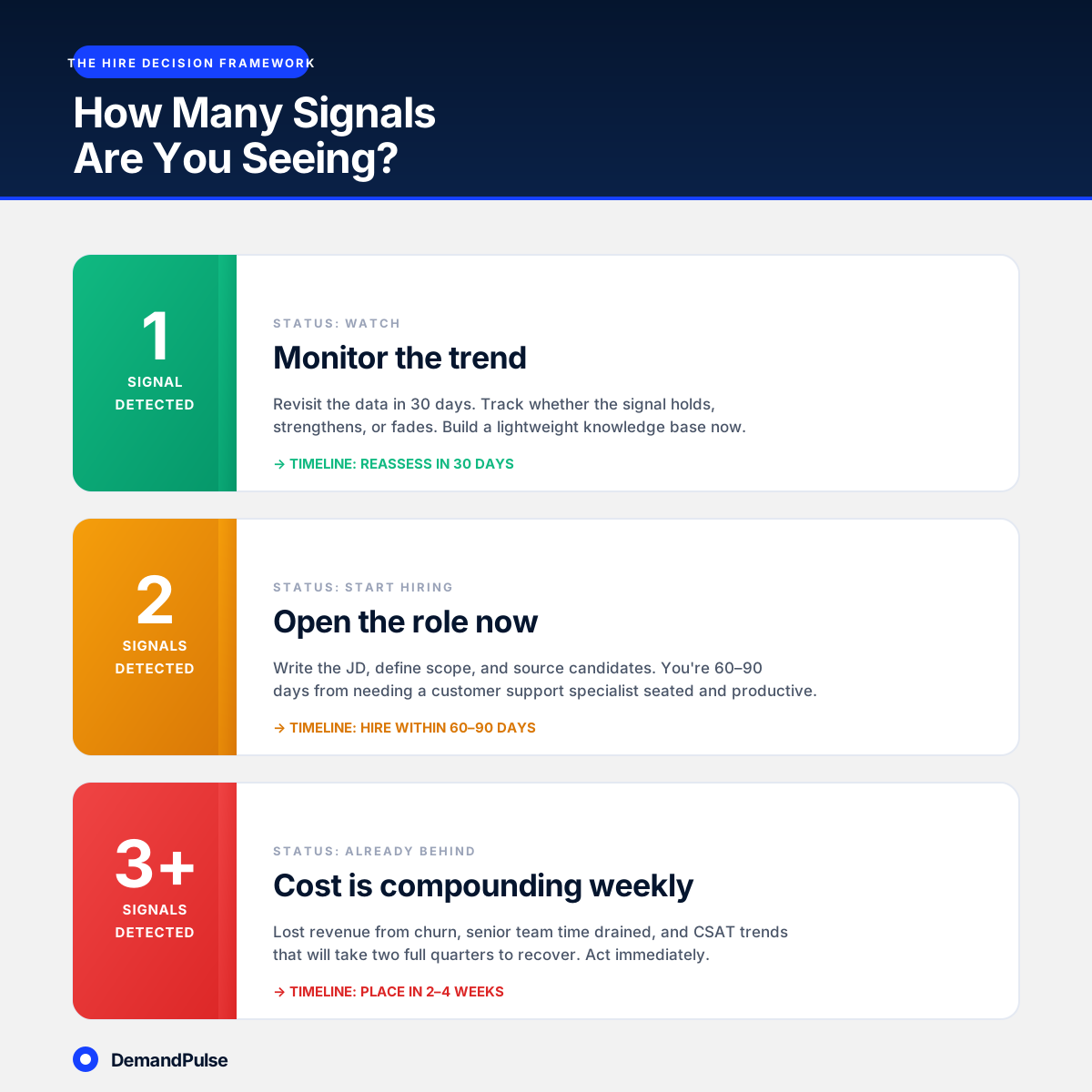
Seeing two or three of these signals?
Run your numbers through our free Support Capacity Calculator to see if you're ready to hire your first customer support specialist - and what it will cost to wait.
Support Capacity Calculator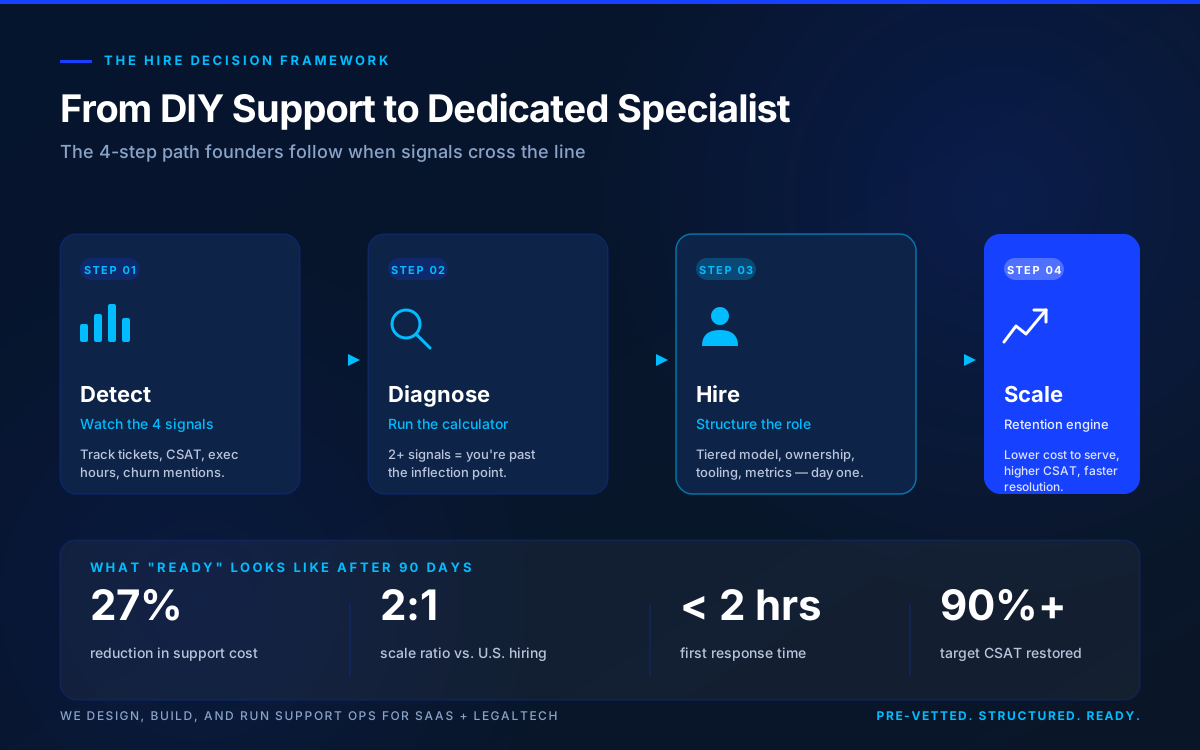
How to Structure Your First Customer Support Specialist Hire
Once you've confirmed the signals, structure matters as much as speed. The most common mistake early-stage founders make is hiring a generalist and expecting them to invent the playbook. They won't. Instead:
Your client support specialist should own ticket triage, SLA adherence, CSAT tracking, and the knowledge base - not just "answering emails." Ambiguity about ownership is the #1 reason early support hires fail in their first 90 days.
This becomes their onboarding playbook and a living macro library. If you can't list them yet, that itself is a sign you need a specialist to build the system.
Even with one hire, separate Tier 1 (billing, access, how-to) from Tier 2 (technical escalations) so you protect engineering focus as volume grows.
Intercom, Zendesk, or Freshdesk with basic reporting pays for itself by month two. Don't try to run SaaS support out of a shared inbox.
First response time, resolution time, CSAT, and backlog - these four numbers are non-negotiable baselines for any customer support specialist.
Why SaaS Companies Partner with DemandPulse for Customer Support Specialists
Building this function from scratch - recruiting, vetting, onboarding, training, and managing - is itself a full-time job. For most SaaS founders and COOs, the opportunity cost of doing it in-house exceeds the value of the hire.
DemandPulse designs, builds, and runs customer support operations for LegalTech and SaaS platforms - reducing cost to serve while improving response times, resolution rates, and customer satisfaction. We place SaaS-trained customer support specialists who are pre-vetted, structured into proven tiered models, and ready to own the function from day one. Our clients typically see a 27% reduction in support costs, faster ramp times, and measurable lifts in CSAT within the first 90 days. You stay focused on product and growth; we run the function.
"The Inflection Point Is a Choice, Not a Crisis"
The founders who hire customer support specialists reactively - after churn, after bad reviews, after a rough NPS quarter - always pay more. The founders who hire proactively, the moment two or more of the four signals appear, build retention moats their competitors can't replicate.
"Don't wait for the fifth signal. It's called revenue loss."
When you're ready to hire, DemandPulse moves fast.
We place SaaS-trained customer support specialists - pre-vetted, structured, and ready to own the function.
Talk to Our TeamSubscribe for Insights That Drive Growth
Practical tips to help you grow your business and build a great team, sent to your inbox.