Customer Success Management vs. Customer Support: Why Confusing the Two Costs You Customers

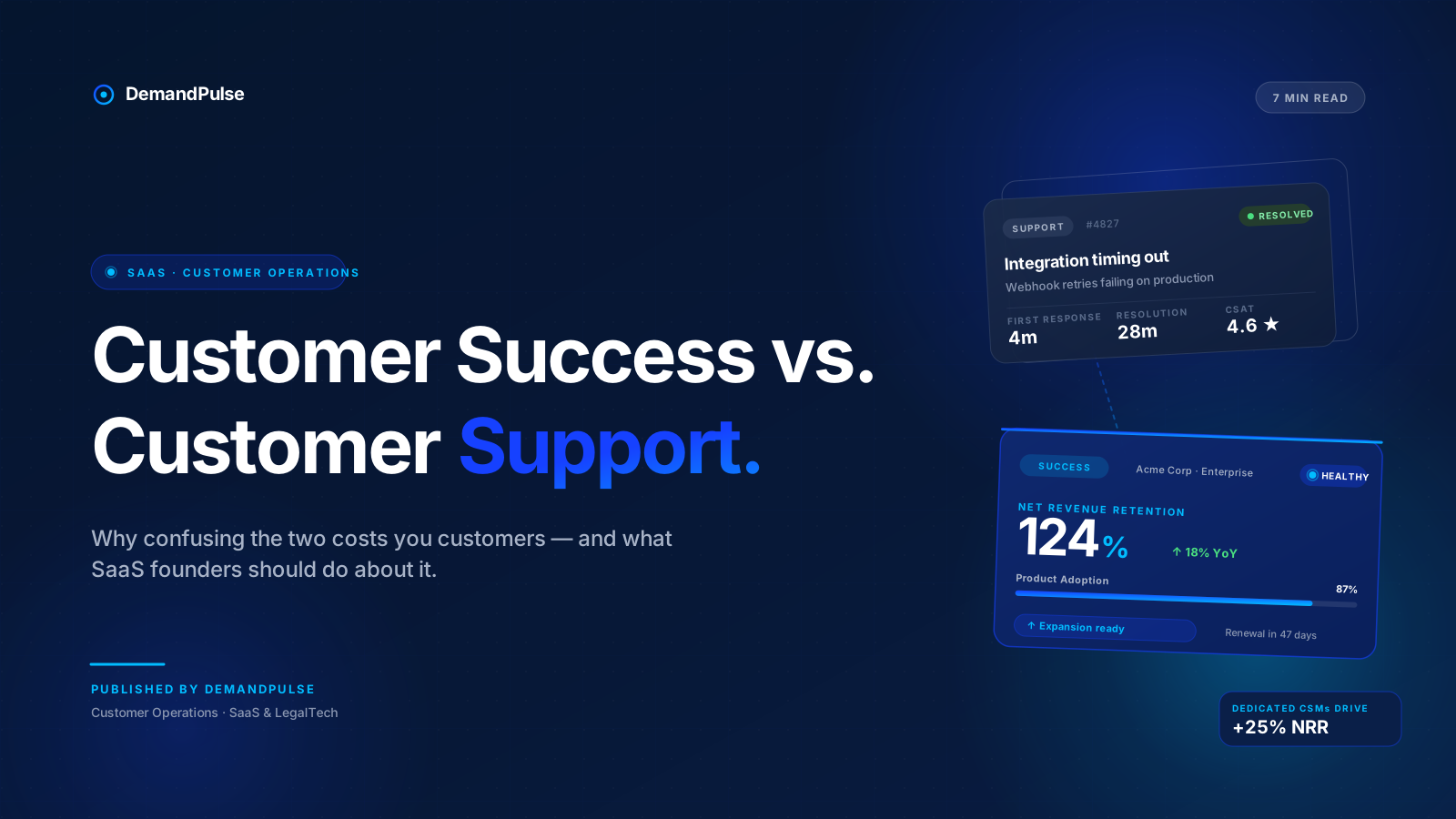
Most early-stage SaaS companies don't have a customer success management problem. They have a definition problem.
The support inbox is full. A customer asks why their integration keeps timing out, and the same person answering that ticket is also expected to drive adoption, run the renewal call, and surface an expansion opportunity.
So when founders ask what customer success management is, the honest answer in most companies is: "Whatever the support team has time for after the queue clears."
That's the most expensive mistake in early SaaS. Companies with formal customer success teams retain customers at significantly higher rates - firms with dedicated CSMs see up to 25% higher net revenue retention than those without.
When you collapse the two roles into one job description, you don't get one great team. You get one overstretched team that drops both balls.
This post draws a hard line.
What Is Customer Success Management - and Why It's Not Customer Support
What is customer success management? It's the proactive, outcome-driven function that ensures customers achieve the business results they bought your product to deliver. Customer support, by contrast, is the reactive function that resolves issues when something breaks.
Support owns resolution. Success owns outcomes.
That distinction sounds semantic until you look at the metrics. Support is measured on first-response time, first-contact resolution, ticket volume, and CSAT. Customer success management is measured on net revenue retention, gross retention, product adoption depth, time-to-value, and expansion ARR. A support specialist closes a ticket and the work is done. A customer success manager doesn't have a "ticket close" event - their job ends only when the customer renews and expands.
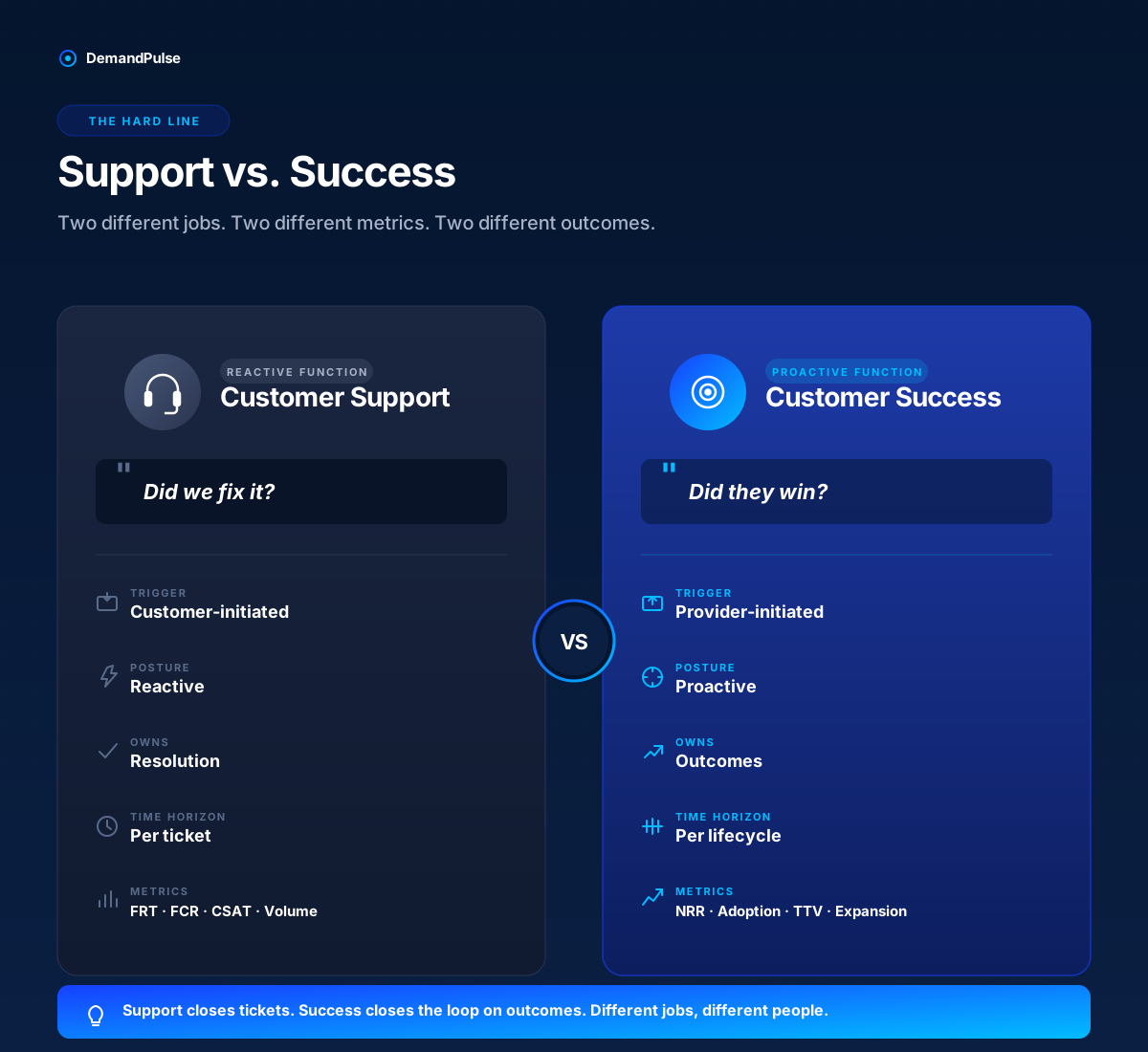
The trigger is different too. Support is customer-initiated - the customer sends a message, the team responds. Success is provider-initiated - the CSM proactively reaches out before the customer ever asks. Proactive outreach delivers the highest retention lift of any single intervention, up to +14 percentage points, specifically because CSMs reach accounts before usage declines, not after.
What Is a Customer Success Manager? (The Role, Not Just the Title)
So what is a customer success manager doing all day, if not answering tickets?
A customer success manager owns a portfolio of accounts and is accountable for whether those accounts hit their stated business outcomes.
In a customer success manager SaaS context, that means mapping every account's success criteria during onboarding (not just teaching them how to log in), running structured account reviews like QBRs and executive business reviews, spotting churn signals early - declining usage, champion turnover, missed milestones - and intervening, identifying expansion opportunities and partnering with sales to close them, and owning the renewal conversation as a planned motion rather than a reactive scramble.
Notice what's not on that list: closing tickets, troubleshooting integrations, walking a user through a password reset. Those are support specialist responsibilities. When you ask a CSM to do them, you're paying a senior salary to do junior work - and the strategic work doesn't happen.
Three Scenarios Where the Confusion Costs You Customers
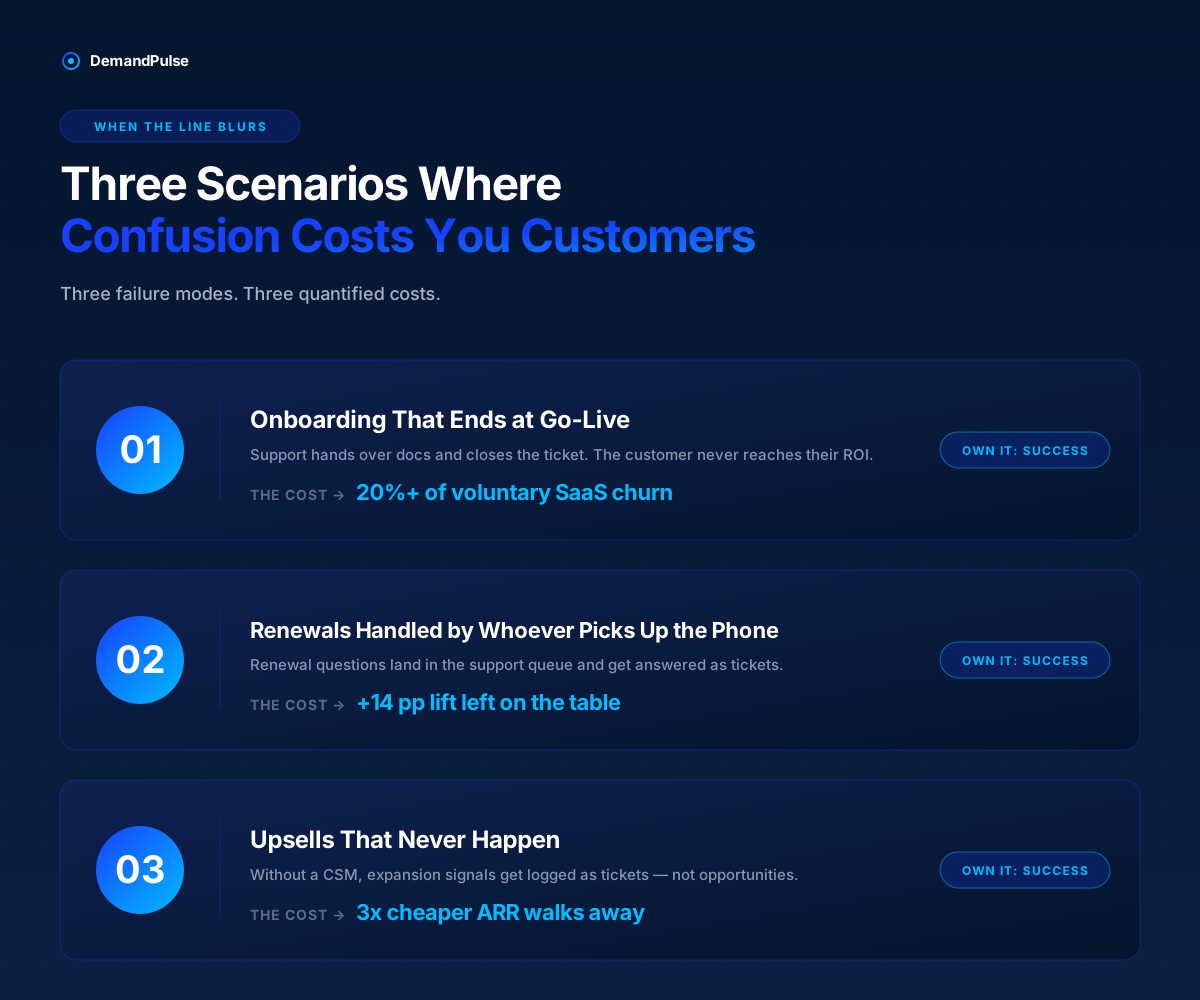
Here's how confusion actually shows up in the wild - and what each scenario costs.
Scenario 1: Onboarding That Ends at Go-Live
The classic mistake: support runs onboarding because they're already the team customers talk to. They get the customer logged in, walk through the setup checklist, hand over documentation, and close the implementation ticket.
Then nothing.
Onboarding isn't a setup task - it's a value realization motion that runs 90 to 180 days. Over 20% of voluntary SaaS churn is directly linked to poor onboarding. Customers who hit "go-live" but never adopt the workflows that drive ROI quietly stop logging in by month four.
By month nine, they're an easy churn for your competitor. A CSM doesn't end onboarding at go-live. They end it at first measurable business outcome.
Scenario 2: Renewals Handled by Whoever Picks Up the Phone
A renewal email goes out. The customer has a question. It lands in the support queue. A support specialist - trained on resolution, not retention - answers it as a ticket: factual, accurate, transactional. Two weeks later the customer doesn't renew.
Renewal isn't a transaction. It's the natural endpoint of a relationship the CSM has been building for twelve months.
By the time renewal hits, a healthy customer success function has already run a renewal-readiness review, surfaced any expansion conversations, and either confirmed the renewal verbally or flagged it as at-risk. There's no surprise. When support owns renewals, you're betting your retained revenue on whoever picks up the phone that day.
Scenario 3: Upsells That Never Happen
It costs SaaS companies $1.78 to acquire a dollar of ACV from new customers, but only $0.61 to acquire a dollar of ACV from upsells and expansions - and top-performing SaaS companies generate over 50% of new ARR from expansion alone.
But upsells don't happen on their own. Someone has to be tracking adoption, recognizing when a customer has outgrown their tier, and starting the expansion conversation.
Support doesn't see those signals. They see tickets. A support specialist looking at a ticket from a power user hitting their seat limit sees "user permissions issue."
A CSM looking at the same account sees "expansion opportunity, schedule the conversation."
When you don't have a dedicated CSM, those expansion conversations don't get half-handled. They simply don't happen.
Ready to draw the line - and staff both functions correctly?
Start the ConversationWhat the Right Organizational Split Looks Like
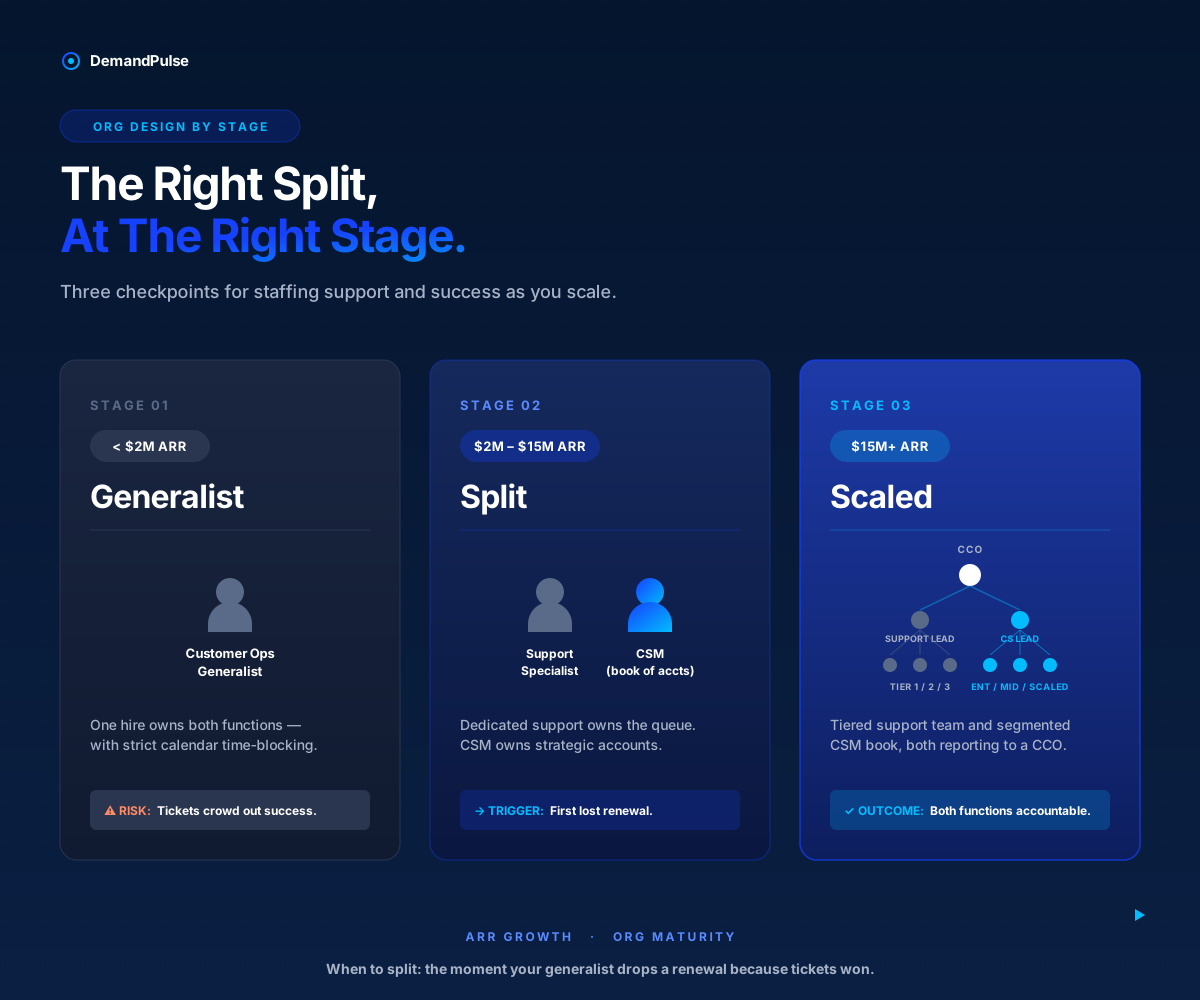
The right structure depends on your stage. Here's how the split should evolve as you scale.
Generalist
Pre-Series A
One customer operations hire owns both functions - with explicit calendar time-blocking. Mornings for support, afternoons for success.
⚠ Risk: Tickets crowd out success motions.
Split
Series A to Series B
Dedicated support specialist owns the queue. CSM owns a book of strategic accounts. Tier the rest with a low-touch digital motion.
→ Trigger: Your first lost renewal.
Full Org
Series B and beyond
Tiered support team (T1/T2/T3) plus a segmented CSM team - enterprise, mid-market, scaled - both reporting into a Chief Customer Officer.
✓ Outcome: Both functions accountable.
The point at which you split isn't arbitrary. It's the moment your generalist starts dropping renewals because tickets won. If you've already lost one renewal to inattention, you're past it.
How DemandPulse Builds Both Functions for SaaS Companies
Most SaaS founders don't need a vendor to tell them they should build both functions. They need someone who knows where the line goes - and how to enforce it.
DemandPulse designs the structure: a dedicated support team measured on resolution and CSAT, a customer success function measured on retention and expansion, and the documented handoff between them so churn signals don't get lost when a ticket should have been an account review.
For teams running lean, that means we can stand up either function on its own - or both at once, with the seam between them engineered from day one. Support leads route adoption gaps to your CSM the moment they show up in tickets. CSMs surface product friction back to support training instead of letting it accumulate. The result isn't two outsourced teams sitting in silos. It's one operation that knows which job belongs to which seat, and holds each one accountable for the outcomes it was actually built to deliver.
The Bottom Line
What is customer success management, in one sentence? It's the discipline of making sure customers achieve the outcomes they bought your product for - proactively, on a planned cadence, with accountability for retention and expansion revenue.
What is customer support, in one sentence? It's the discipline of resolving issues quickly and consistently when customers hit a problem.
Both functions matter. But they aren't the same job. The customer success manager SaaS playbook doesn't fit a support specialist's day, and vice versa.
When founders confuse the two, they don't save money on headcount - they pay for it later in churn, missed expansion, and renewal surprises. Draw the line early. Staff each function with the right people. And measure each one on the outcomes it's actually built to deliver.
Building both functions?
DemandPulse helps SaaS companies staff Customer Support Specialists and Customer Success Managers - with the right structure around both.
Start the ConversationSubscribe for Insights That Drive Growth
Practical tips to help you grow your business and build a great team, sent to your inbox.