Why Most Law Firm Outreach Emails Get Ignored (And What to Do About It)

If you've ever sent a cold email to a potential client and heard nothing back, you're not alone. And it's probably not what you think.
It's not your service. It's not your reputation. It's the email itself.
Nine Seconds.
That's all you get. Make them count.
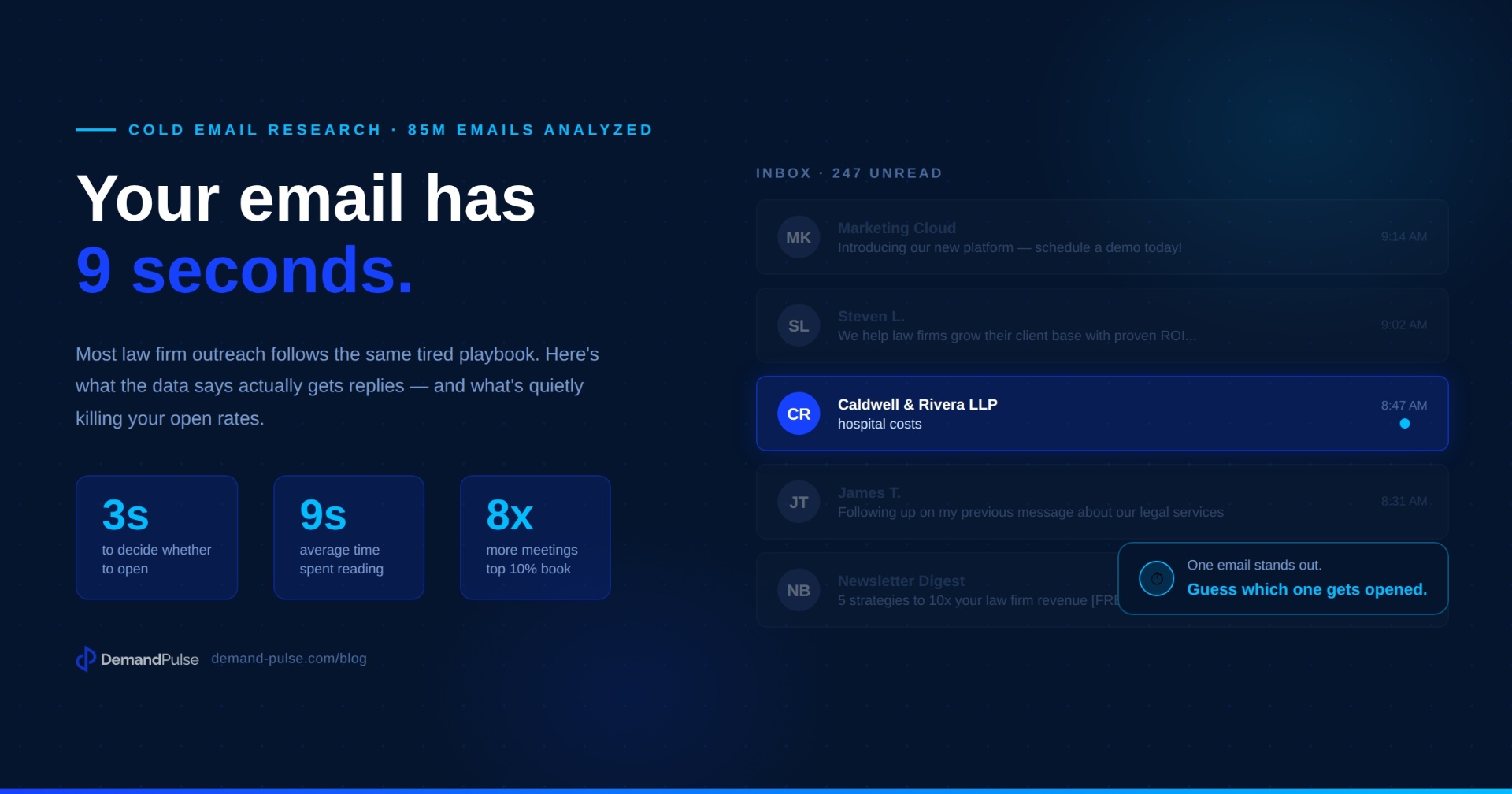
Most law firm email marketing follows the same tired playbook: formal intro, credential list, request for a call. And most of it gets ignored. A joint study by 30 Minutes to President's Club, Gong, and Outbound Squad analyzed over 85 million cold emails to figure out what actually gets replies.
The gap between top performers and everyone else was staggering: the top 10% of senders book 8 times more meetings than the average. Same tools, same inboxes, completely different results.
The difference isn't volume or luck. It's craft.
Here's what the data says — and what it means specifically if you're running a law firm.
85M+
Cold emails analyzed
8×
More meetings by top 10%
9 sec
Average email read time
The Inbox Is a Battlefield
The average executive receives hundreds of emails a day and spends less than 3 seconds deciding whether to open one. If they do open it, they spend about 9 seconds reading it.
That's not a lot of runway to explain your practice, your credentials, and why someone should trust you with their legal matter. Which means most of the instincts attorneys have about professional communication — thoroughness, formality, demonstrating expertise upfront — actively work against them in cold outreach.
The firms that get replies write differently. Here's how.
Want to skip the trial and error?
We'll build you a free custom AI email assistant tuned to your firm and practice area. Tell us what you do and who you're reaching — we'll send you the tool.
Business email required.
1. Your Subject Line Is the Whole Game
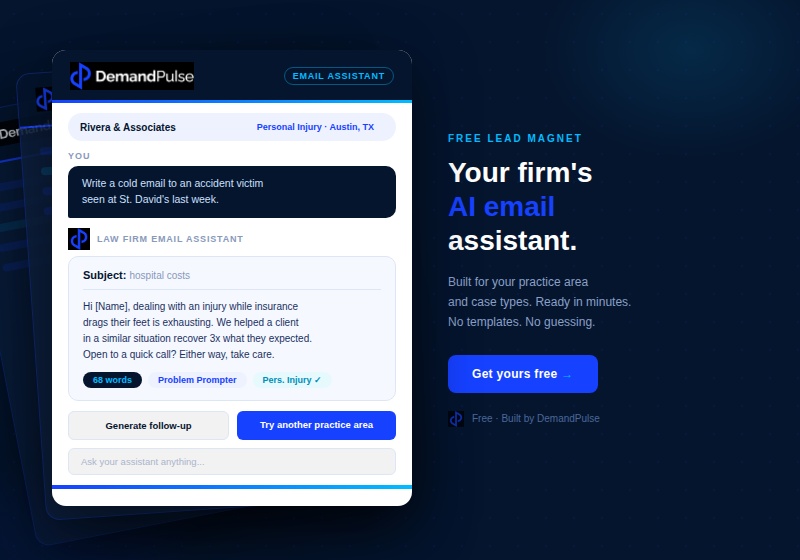
The subject line determines whether your email gets opened at all. And the data on what works is pretty counterintuitive.
Keep it short
The Gong data shows reply rates decline as subject lines get longer, with 1 to 2 word subject lines consistently outperforming everything else. Not a sentence. Not a question. A phrase.
Use all lowercase
Lowercase subject lines drive a 36% higher open rate than sentence case. They look like internal communications — something from a colleague, not a marketer.
Speak in priorities, not pitches
Subject lines referencing problems or priorities outperform buzzwords, social proof, or numbers. "Accident claim delays" lands differently than "get more clients with our proven system."
Never leave it blank
Empty subject lines get opens out of curiosity but tank reply rates by 12%. It reads as clickbait, and people resent it.
For law firms, this means your subject line should reflect the specific concern your prospect already has — not the solution you're selling. A family law attorney reaching out to recently divorced individuals might use "custody timeline questions" over anything that mentions their firm name or services.
2. Shorter Is Always Better
This one is hard for attorneys to accept, but the data is unambiguous.
Emails between 50 and 100 words generate the highest reply rates. The sweet spot in terms of structure is 3 to 4 sentences. After 100 words, reply rates drop sharply — and they keep dropping.
The instinct to demonstrate expertise through length is understandable. But your prospect isn't evaluating your qualifications in this email. They're deciding in 9 seconds whether they want to have a conversation at all. That's a much simpler job, and it requires a much simpler message.
📱 If your email requires scrolling on a phone, it's too long.
3. Stop Pitching. Start Prompting.
The most important shift in how top-performing senders write emails isn't about length or subject lines. It's about what the email is actually trying to do.
Most outreach emails are thinly disguised ads. They introduce the sender, list credentials or services, and ask for a meeting. The Gong data shows this approach carries a significant penalty: pitch words like buzzwords, "platform," and ROI-based language all reduce reply rates, in some cases dramatically. The word "AI" alone drops reply rates by 18%.
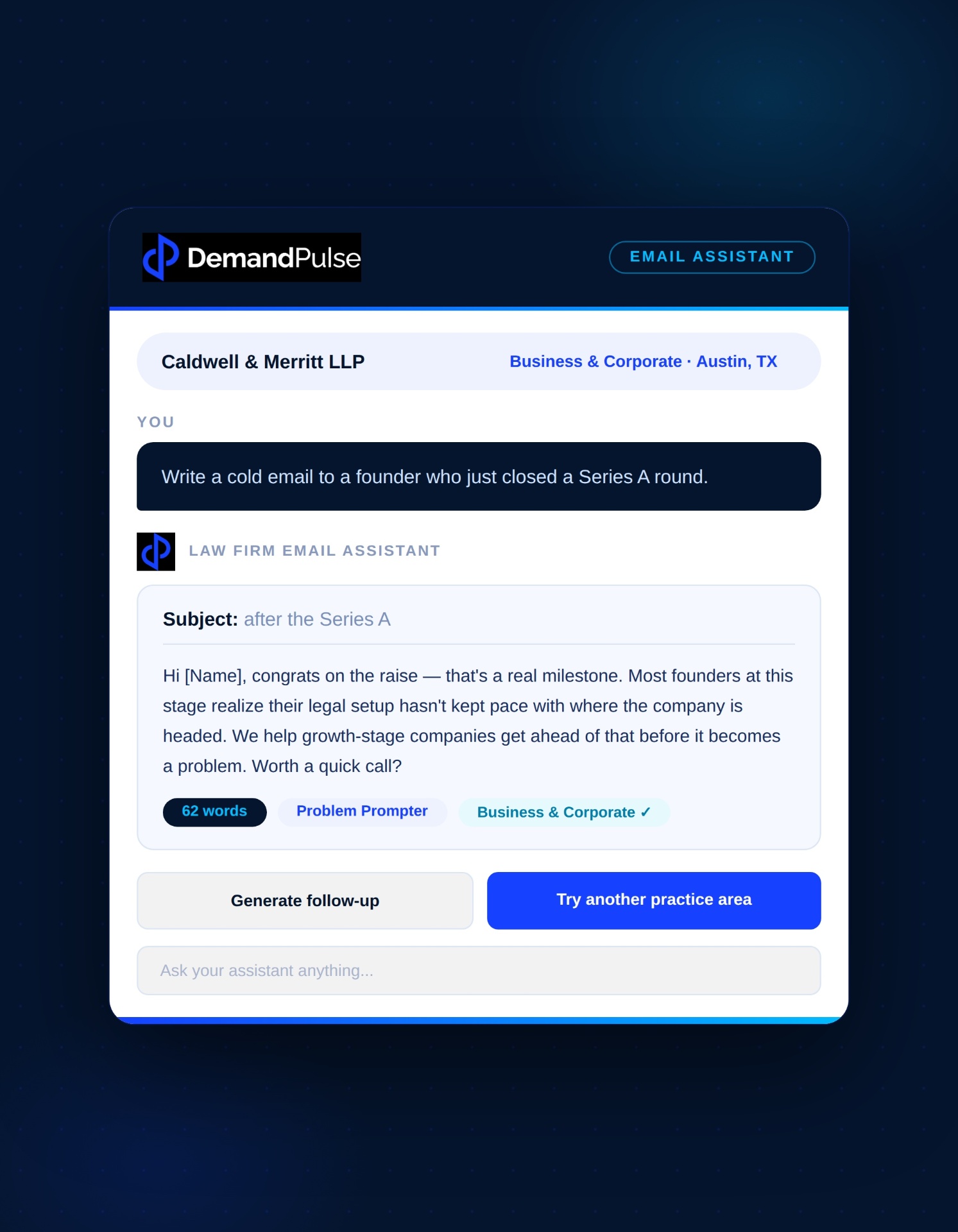
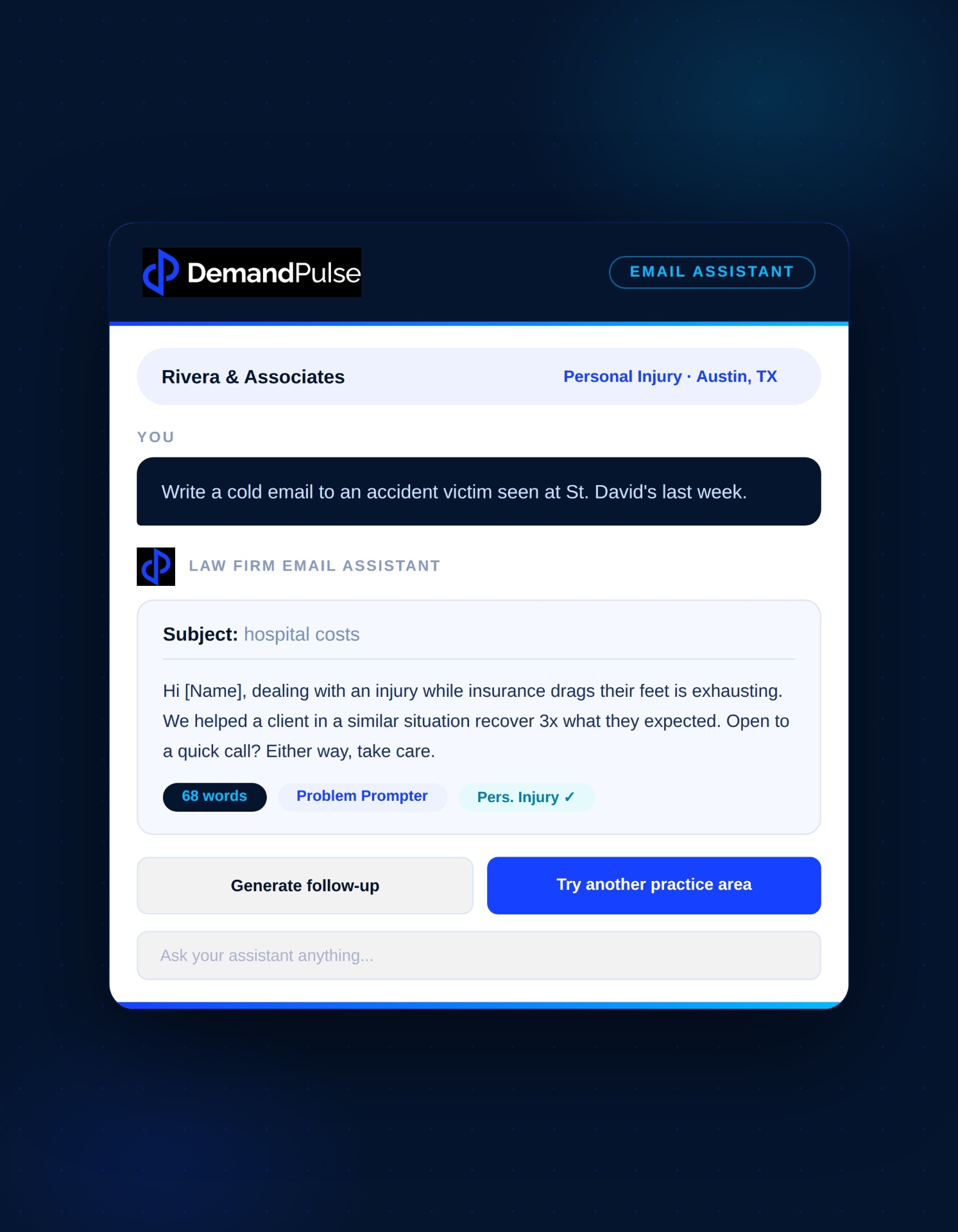
What works instead is what the research calls the Problem Prompter framework — a structure that treats the email as a way to share a relevant insight, not deliver a pitch. Here's how it works in four sentences:
Lead with something they already care about
Reference a real priority or challenge relevant to their situation — something that signals you understand their world before asking anything of them.
Name a specific friction point
Call out the obstacle that makes that goal harder. For a personal injury firm, that might be navigating insurance company timelines alone.
Acknowledge what they're probably already doing
Validating their current approach reduces resistance and makes the email feel like a peer conversation rather than a sales pitch.
Offer a perspective, not a meeting
Instead of asking for 15 minutes on their calendar, share how you've helped someone in a similar situation.
Top performers use "you," "your," and "your team" language 29% more than average senders. The email isn't about you. It's about them.
4. Your Call to Action Is Probably Too Heavy
Asking for a meeting reduces reply rates by 44%
Dropping a calendar link is even worse. It signals entitlement before they've decided whether they even want to talk to you.
What works instead is either asking for interest ("Would it be useful if I shared how we handled a similar situation?") or making a low-friction offer of value — a brief case summary, a relevant resource, a simple question about their situation. This is exactly the kind of marketing automation and CRM workflow that DemandPulse helps law firms build, so follow-up happens consistently without relying on anyone to remember to do it manually.
The soft close matters too. Ending with something like "Either way, appreciate what you're building" leaves a positive impression with no pressure. It signals confidence, not desperation.
5. One Email Is Never Enough
The data recommends sending approximately 6 emails over a 14 to 28-day window. After that, reply rates fall below 0.5% and it's time to move on.
Follow-up emails — called bump emails — should be kept to 1 to 2 sentences. Don't re-pitch. Just resurface the previous message with a simple "Thoughts?" or rephrase your original ask. The research found that bump emails using breakup language nearly double reply rates. Something like "Totally understand if the timing isn't right — happy to reconnect down the road" often prompts a reply precisely because it removes pressure.
Combining cold emails with calls and voicemails can triple your reply rate.
Why This Looks Different for Law Firms
Everything above applies broadly to cold outreach. But the reason generic law firm email marketing advice won't get you very far is that law firm outreach has a different set of variables.
The person you're reaching isn't a procurement manager evaluating software. They're often in a stressful personal situation — dealing with an injury, a divorce, a business dispute, a criminal charge. The tone, timing, and framing that works for B2B SaaS doesn't translate.
Your practice area shapes everything: the urgency of the message, the concerns your prospect is likely sitting with, the social proof that actually resonates, the kind of offer that feels helpful rather than opportunistic. A criminal defense firm operates in a completely different emotional register than an estate planning practice.
That specificity is exactly what makes the Problem Prompter framework powerful for law firms — and exactly why a generic template won't cut it.
Get a Custom AI Email Assistant Built for Your Firm
We built a free AI email assistant that applies everything in this guide — tuned specifically to your firm and your case types.
Tell us your practice area, the clients you're trying to reach, and how you typically approach outreach. We'll build you a custom tool that writes on-brand, high-converting cold emails in seconds.
No templates. No generic prompts. Built for your practice.
Related Articles
Why Law Firm Marketing Starts with Operations
Before you spend on ads, fix the engine behind them.
The Definitive Guide to CRM for Law Firms
Compare intake tools to full-stack CRM platforms for legal practices.
Marketing Automation for Law Firms
Choose the right growth path: HubSpot vs. Clio Grow in 2026.
Law Firm Technology as a Strategic Asset
How to turn your tech stack into a competitive advantage.
Subscribe for Insights That Drive Growth
Practical tips to help you grow your business and build a great team, sent to your inbox.